
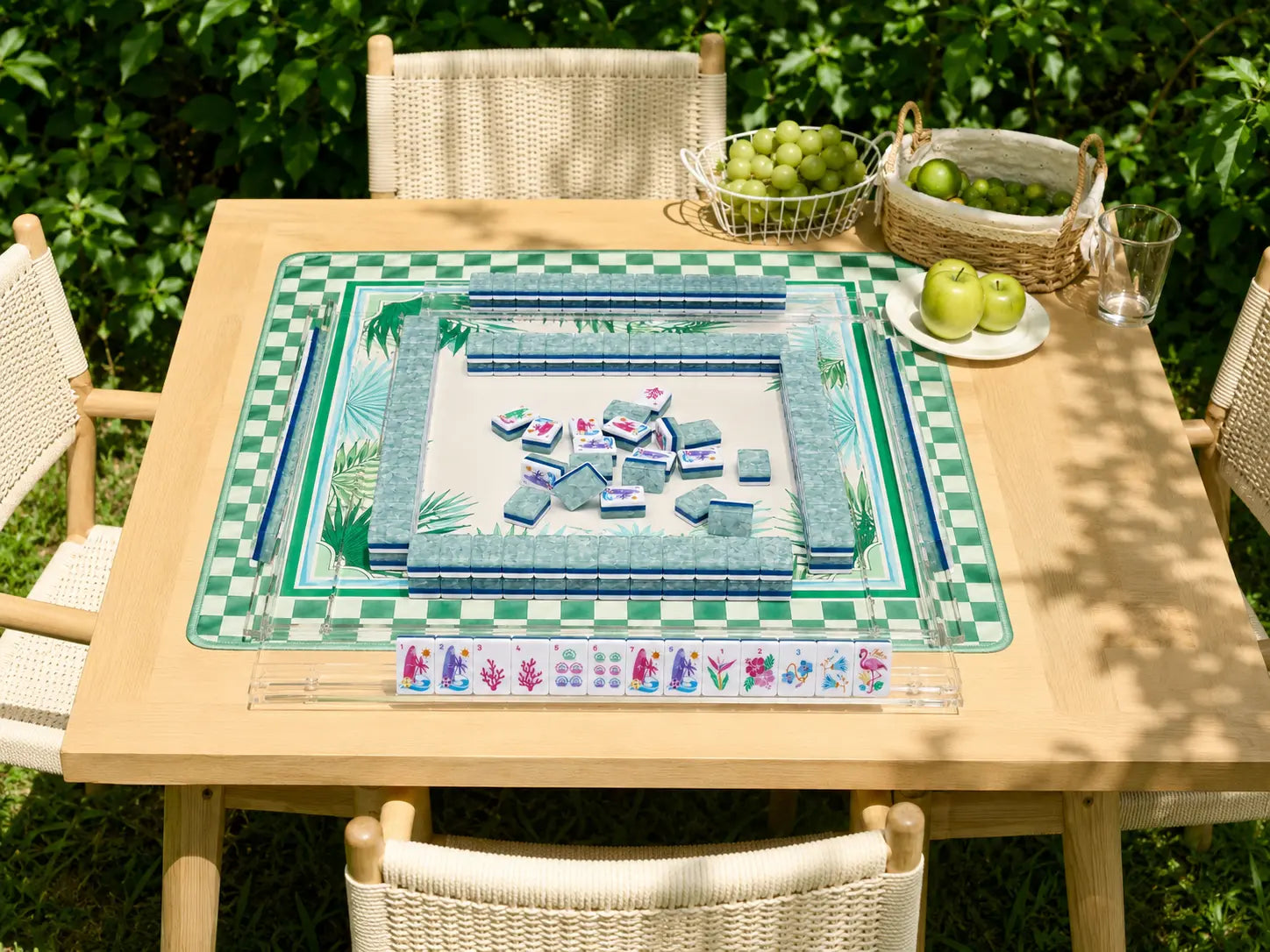
Mahjong Etiquette for Beginners: Make Every Seat Feel Welcome
Direct answer
Good Mahjong etiquette protects the shared rhythm of the table: arrive prepared, name discards clearly, give players time to call, handle tiles carefully, and ask before offering advice. When rules differ, a brief agreement before the deal is more gracious than correcting one another during play.
Agree before the walls go up
Confirm the ruleset, card year, scoring approach, teaching level, and house conventions. With beginners, decide whether open racks, take-backs, or coaching are allowed.
A short agreement lets experienced players relax and prevents new players from discovering invisible expectations through embarrassment.
Make every turn easy to follow
Draw in order, keep the rack organized without delaying the table, and name every discard clearly where all players can see it. Leave a reasonable pause for calls before the next draw.
Announce calls and Joker exchanges. If an action may be illegal, pause and ask instead of moving tiles quickly and trying to repair the table later.
Help without taking over
Ask, “Would you like a hint?” before analyzing another person’s rack. At a teaching table, explain the principle instead of selecting the tile for them.
Do not pressure someone to reveal private strategy or play at an experienced group’s speed.
Repair mistakes generously
Use the rule or teaching policy agreed at the start, apply it consistently, and keep the correction brief. A mistake does not need to become a character judgment.
After the hand, clarify the rule for everyone. The aim is a table people trust enough to return to.
Frequently asked questions
Is table talk allowed?
Social conversation is part of many home games, but strategy talk may reveal information. Ask what level of coaching the group prefers.
Can I change a discard after naming it?
Many groups treat a named and released discard as final, but exact timing rules vary. Agree on a beginner take-back policy before play.
What if I arrive late?
Tell the host as early as possible. A four-player table depends on every seat, so the host may need to delay, find a substitute, or adjust a rotation.
Scope
Welcoming home-table etiquette
Sources
- Associated Press — Mahjong nights draw new, younger crowds
- National Mah Jongg League — current card and official information
Set the tone before the first tile.
Share a short agreement covering pace, coaching, calls, food, phones, and mistakes.





Leave a comment
This site is protected by hCaptcha and the hCaptcha Privacy Policy and Terms of Service apply.