
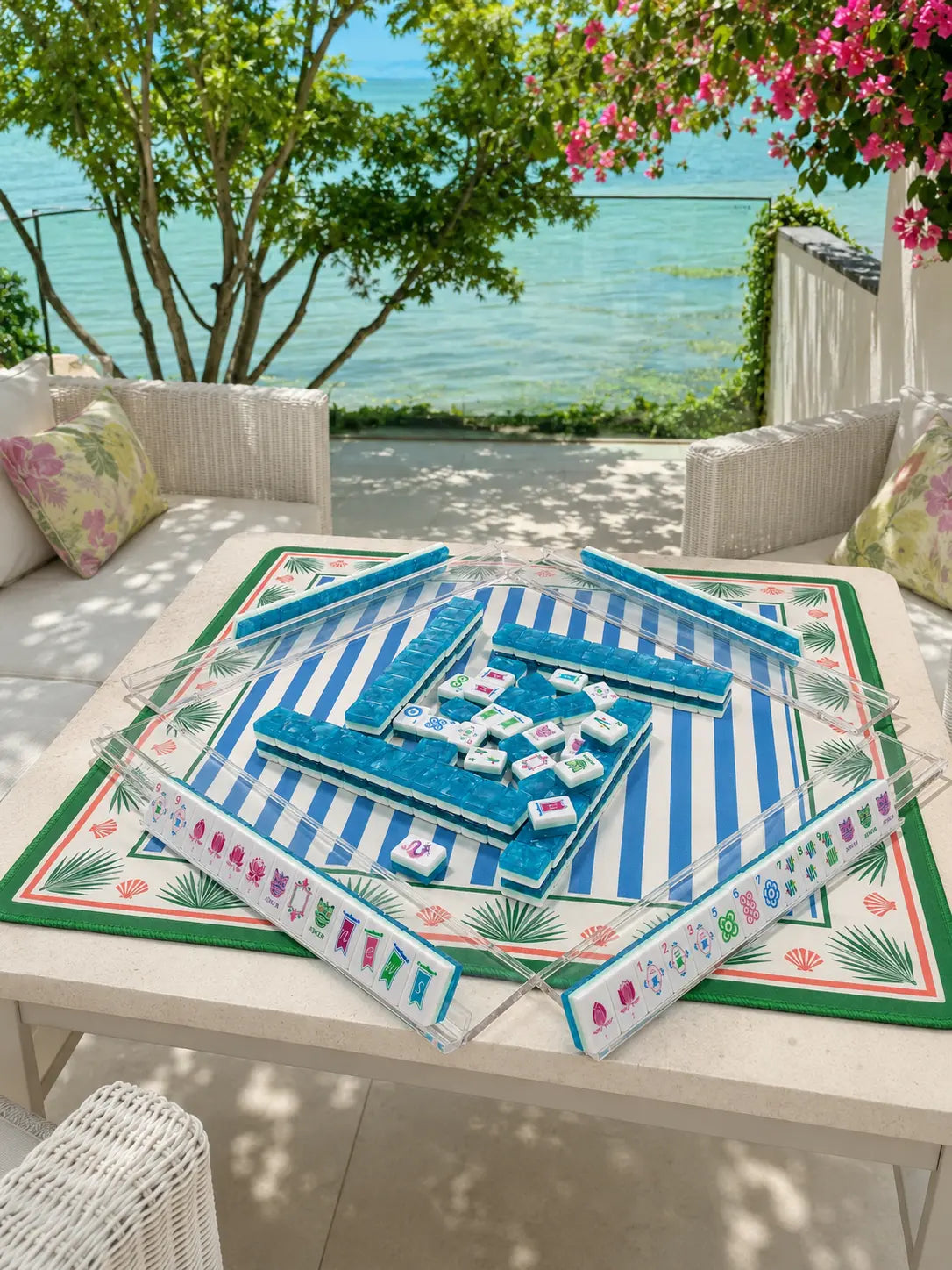
Mahjong Around the World: Seven Ways the Game Changes
Direct answer
Mahjong developed in 19th-century China and spread into communities that adapted its tile set, winning conditions, scoring, and table customs. American, Hong Kong, Mahjong Competition Rules, Japanese Riichi, Taiwanese, Singaporean, and Malaysian play share a family resemblance, but learning one does not automatically teach the others.
What the Mahjong family tends to share
Most variants use numbered suits, honor tiles, drawing and discarding, and the task of shaping a legal hand. Players watch both their own possibilities and the information appearing around the table.
Beyond that foundation, tile counts, hand size, Flowers, Jokers, calls, winning patterns, and scoring can change substantially.
American and Hong Kong-style play
American play commonly uses 152 tiles, an annual card, Jokers, racks, and the Charleston. Winning requires an exact card line.
Hong Kong-style play commonly centers on four sets and a pair, with chows, pungs, kongs, and a fan-based scoring threshold. Local house rules still matter.
Riichi, Taiwanese, MCR, and Southeast Asian tables
Japanese Riichi commonly uses 136 tiles and emphasizes yaku, riichi, dora, furiten, defensive reading, and detailed scoring. Taiwanese Mahjong commonly uses 16-tile hands.
Mahjong Competition Rules use a standardized international scoring system, while Singaporean and Malaysian variants may use different bonus tiles, patterns, and table conventions. Always learn from the rules of the table you are joining.
Join an unfamiliar table respectfully
Ask which ruleset, scoring method, and house rules are in use. Confirm hand size, Flower treatment, calling rules, and any minimum score before the first deal.
Avoid describing one style as the authentic or advanced form of every other style. Each table has a context, and curiosity is a better entrance than ranking.
Frequently asked questions
Can one set play every variant?
Not always. A large American set can sometimes be reduced, but tile size, Flower count, Jokers, red fives, and accessories differ. Check the exact rules first.
Which Mahjong variant is easiest?
Ease depends on the teacher and learner. American play makes valid hands visible on a card but adds the Charleston; other variants may use fewer tiles but more complex scoring.
Why are there different spellings?
Mahjong, mah jongg, and other spellings reflect transliterations, organizations, and community traditions. Spelling alone does not fully identify the rules.
Scope
High-level comparison; local and house rules vary
Sources
- National Mah Jongg League — current card and official information
- European Mahjong Association — MCR and Riichi rules
- World Riichi Championship — international Riichi rules
- TIME — What the history of Mah-jongg can teach us about America
Know the table before choosing the tiles.
Begin with the rules people around you actually play.





Leave a comment
This site is protected by hCaptcha and the hCaptcha Privacy Policy and Terms of Service apply.